In the previous post, we talked about how to manufacture a bronze cast from a 3D printed based off elevation data. Now we dive into the world of operations. How to organize yourself and your business.
This is part 3 in a 4 part series:
Part #1: Selling 3D Bronze Maps - Idea Generation + Validation
Part #2: Making My Way Through Manufacturing: 3D Printing + Bronze Casting**
****Part #3: Behind The Scenes: Brand Identity (Logo, Photography) & Admin Tasks (Tools Used, Automation)
**Part #4: Sales: Trying To Sell A Physical Product From Scratch
Who am I? My name is Greg Kamradt and I am the founder of Terra Mano, we make handcrafted maps of American landscapes. Think 3D printed mountains cast in bronze geared towards outdoor athletes, mountain lovers, and vacationers.
One of the reasons I picked up this project was to try something I knew nothing about. A few people have asked about this process so I wanted to write it out for others. This post is what I would have liked to read at the beginning of the journey.
-
What we will cover:
Admin: Name, Domain, Google Email Address, Social Channels, Organization Files, Tools used
Creative: Logo, Vibe and Feel, Product Photography/Video, Content Marketing - Interviews, Social Media Automation
TL;DR: Create a name, quickly do a logo and invest in product photography. Do content marketing if you can. Don’t spend too much time or energy on things that aren’t providing value to the customer.
Operations
When it comes to setting up a project or business, there are a lot of behind the scenes things that don’t get talked about. Here is a look at what went into the name, website, email addresses, social channels, and 3rd party tools used.
Name
Terra Mano literally means “Earth Hand” in Italian. I originally wanted to do “Earth By Hand” or Terra A Mano, but the extra A seemed redundant.
I wanted an artsy, latin sounding name and Terra Mano did both of those for me. I also knew not to dwell on it too much so I spent about a week noodling before I moved on.
Whenever I have a name of a project I like, I run it through tests:
The Voice Test - Does it roll well off your tongue? You’re going to be saying it 100x daily and writing about it.
The URL Test - Hypothetically, could you get the .com URL you want for your exact name? Great if you can, if not you have a few options:
- Get an alternative top-level domain: Try .co or .io. Warning: Paul Graham once said, “If you have a US startup called X and you don't have x.com, you should probably change your name.“
The Existing Business Test - Head over to Delaware Business Search or California Business Search and type in your name. It’s not a huge deal if it’s taken, you can get creative with your official name vs your marketing name.
The Google Test - What pops up when you google your name? You’re going to be competing with these search results for search rank. It took about a month for “Terra Mano” to pop up as the first result on a fresh incognito tab for me.
The Social Channel Test - Search your name all over your social channels and see what pops up. Name Checker quickly does this for you
Finally, also think about whether or not you want a literal name or not. Ex: “Terra Mano” vs “Tahoe Wood Maps”
“Terra Mano” doesn’t describe what the business does. The listener would need more information to know. In order to help with this, I made our sub-slogan “Handcrafted Maps.” Now on our logo / title you get both “Terra Mano - Handcrafted Maps.”
A name like Tahoe Wood Maps or North Drinkware describe what the business does without needing to know more.
Domain
I picked up my domain (TerraMano.co) from Google Domains. It’s easy.
TerraMano**.com** was taken so:
I tried contacting the email listed on the parked page, no response.
I tried contacting the service provider, I got a response but they couldn’t tell me anything.
I did a whois lookup to see what was registered and didn’t get anything good.
I got a quote from a URL broker - a modern day URL cowboy - and it was way too high ($) for what I wanted.
I went with terramano.co. A close second was terramanomountains.com
Google Email Address
Having your email address end in your domain name URL adds a sense of professionalism and legitimacy. Especially for when you’re trying to fake it till you make it and test a new product.
Google makes it easy to do this through G Suite. It took about 10 minutes to set up and costs me $6/month.
I even got a couple “alias” email addresses. So now contact@terramano.co and sales@terramano.co go to a single email address.
Social Channels
After I chose the name, I went to get the social channels. There is no secret here. Head to your social media platform of choice and grab your account names. To organize this I made a spreadsheet with them all.
I got my name or a variation of my name on Facebook, Instagram, Twitter, Pinterest, Snapchat, Shopify, and Reddit.
Tip: If you can put 2-3 words on your handle, go for it. On instagram my name used to pop up as “Terra Mano” when users were suggested to follow me. Now it pops up as “Terra Mano | Handcrafted Maps” which seemed to help bump up follower count.
File Organization
I use google drive for most of my online organization and collaboration with others. For photos and editing I mostly use my laptop.
IMO, it’s hard to beat the simplicity and robustness of google docs.
Other software & tools
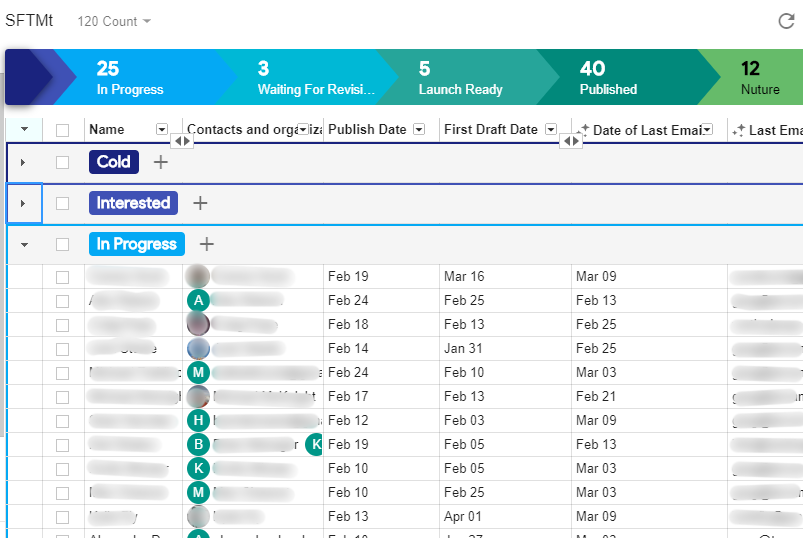
Streak - For lightweight CRM purposes. I’m able to stay in the free tier. With their limitations it’s 85% of what I need. It’s a nice gmail driven tool.
Creative
3D Modeling & Geographic Data
General
Google Analytics (Free) - Web Analytics and tracking
Brackets (Free) - Simple coding editor
AWS Lightsail ($5/month) - For some light social channel automation
Shopify ($29/month) - For online store and website. It’s good for a store, but I want a bit more flexibility to edit pages
Klaviyo (Free) - Email marketing
SEMRush ($99/month) - I used 1x month of SEMRush to do some competitor and keyword research. It was a great tool but I didn’t need to use it continually.
G Suite ($6/month) - Email and Domain names
Here is a view of my Stories From The Mountain (below) pipeline held in Streak. Very simple to manage
Creative
A mentor once said to me, “Running a startup is one of the most creative things you can do, it’s a major creative outlet.”
I never thought about it this way, but it’s true. Literally every choice you make requires a bit of creativity and imagination.
I had a lot of fun & energy for creating the visuals and marketing.
Logo
When it comes to making a logo, I see three quick options:
DIY - You make it yourself. This is ok but your lack of professional skill (at least mine) will generally show
Logo generator - You can easily create a couple logos in seconds online.
Freelancer - Put up a job on Fiverr or Upwork and see what you can get. I found 68K people who pop up on Upwork for “logo design”
I went with the freelancer option and paid $150 to design a logo. $150 is cheap and expensive all at the same time. Work costs money.
Here’s the Terra Mano logo they made:
Tip: If you get a logo made by someone else, make sure to ask for the .psd (photoshop) or .ai (adobe illustrator) files as well as all of the colors and fonts used. This will help you make modifications in the future.
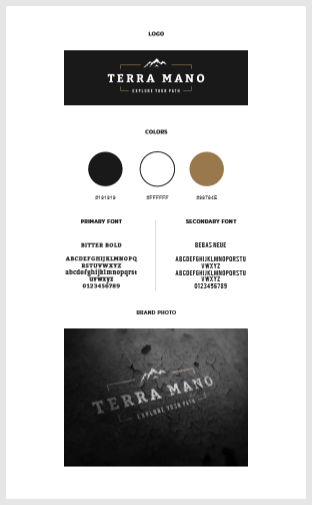
My freelancer also gave me a brand identity board. This is standard in the design world. If you need a logo maker I can vouch for let me know.
Vibe and Feel
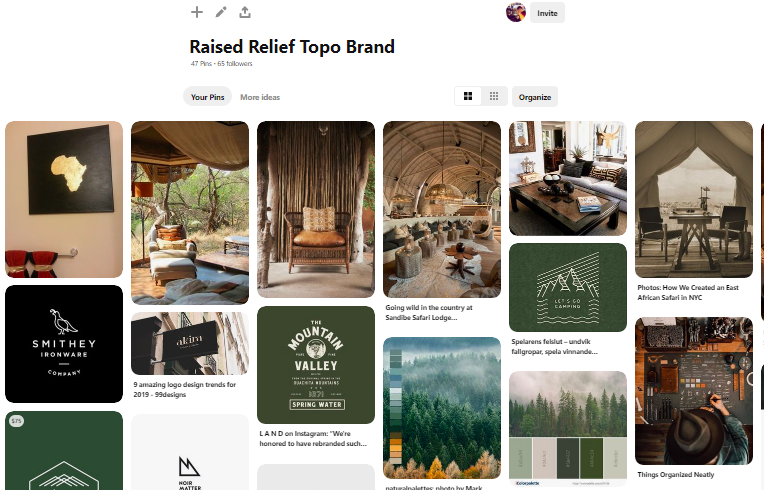
In order to get the brand voice & vibe I wanted, I went to where all good design inspiration starts, no not dribbble but...Pinterest.
I went through a list of keywords and made a board with things I liked.
Product Photography
Product photography is a fun topic - you can get quality pictures with a professional photographer ($100-$500 / hr) or you can try to take pictures on your own ($free / hr).
With a small amount of photography experience in the past, and an over-confident attitude, I decided to take a crack at it myself.
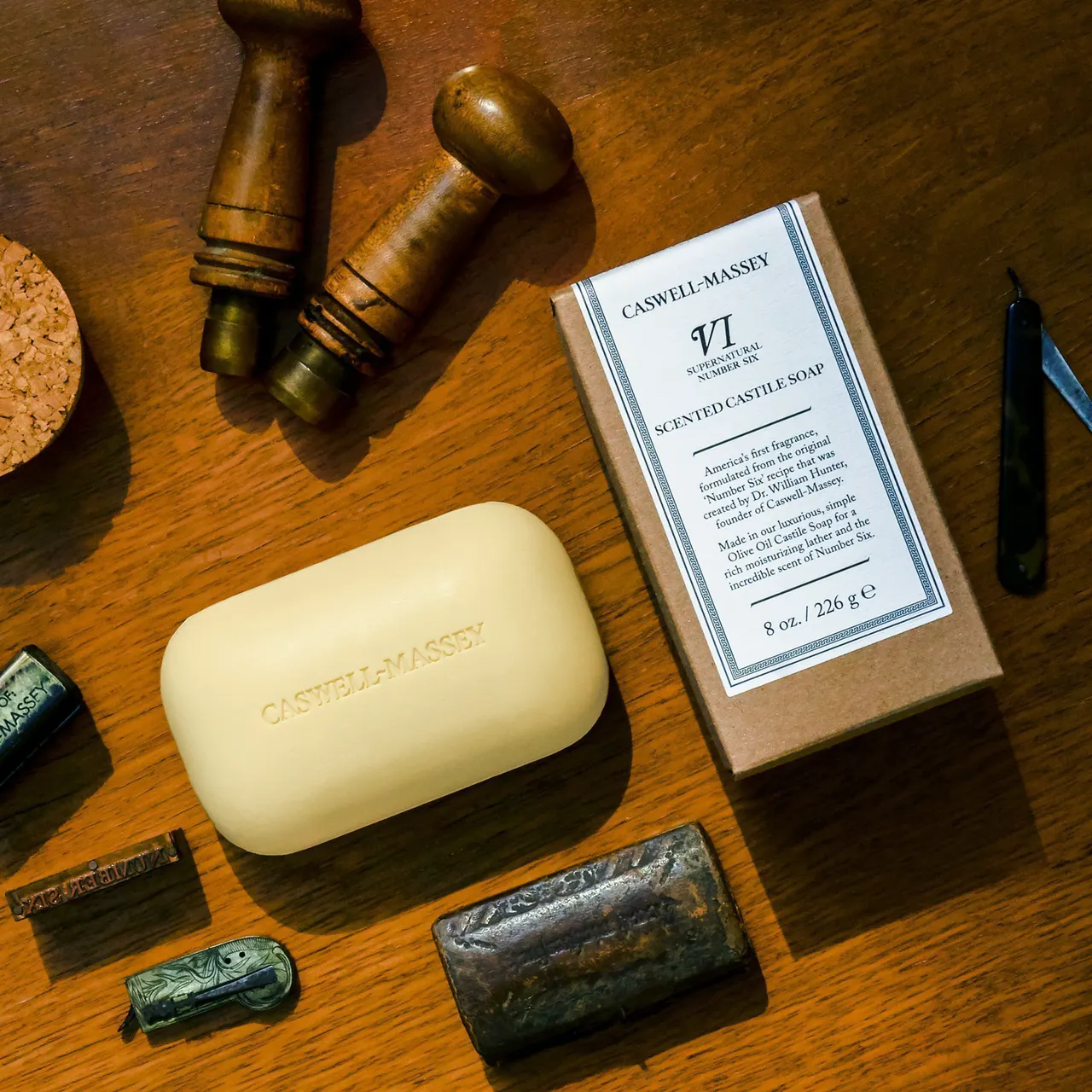
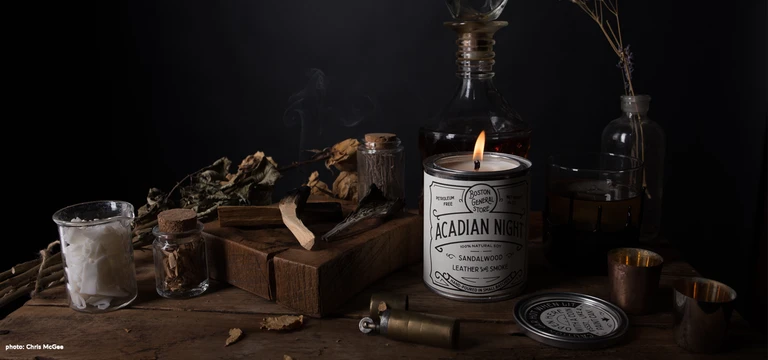
It started again where all good visual inspiration starts, Pinterest. I made a product photography board of other photos which matched the vibe and feel that I wanted.
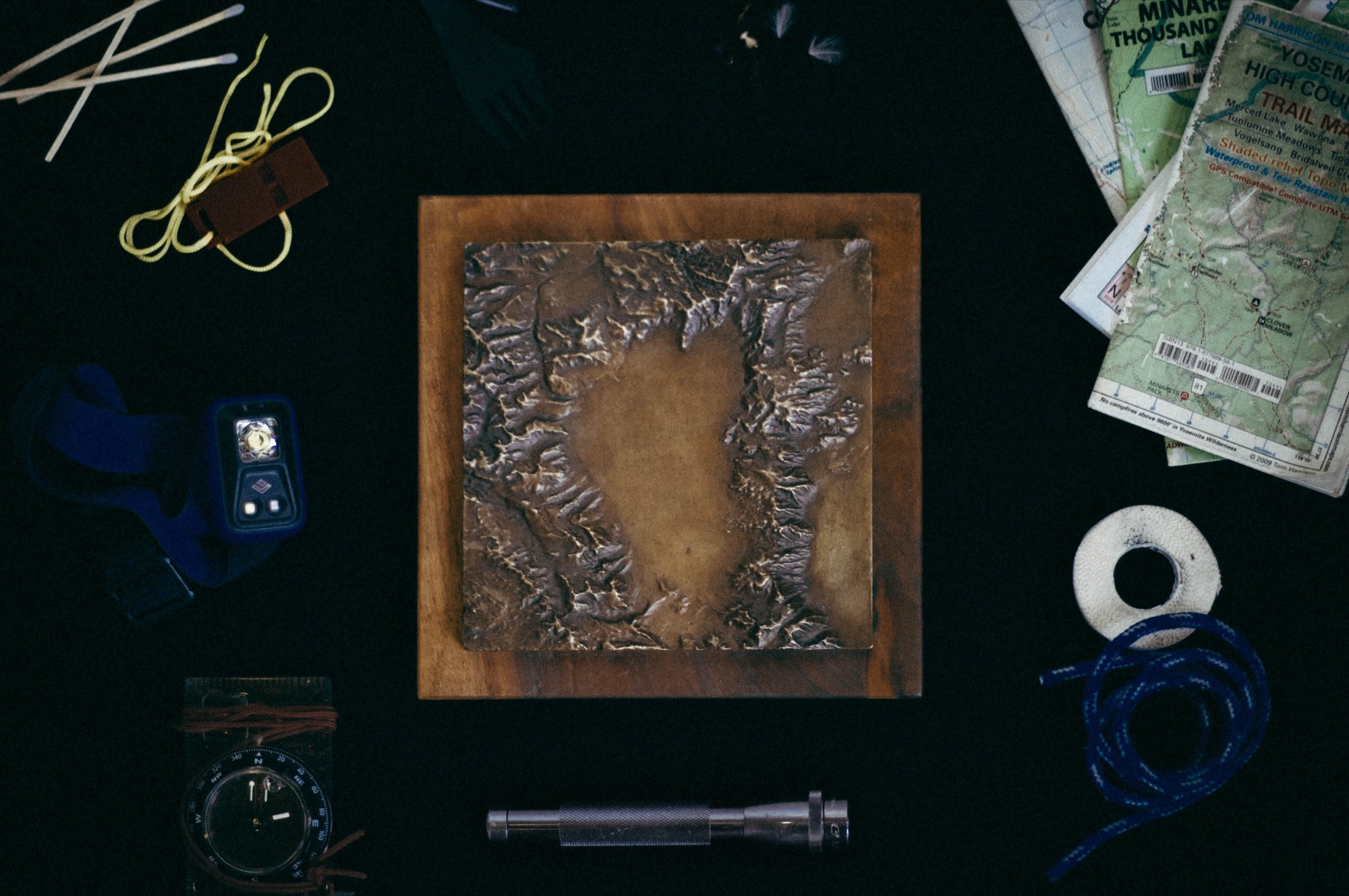
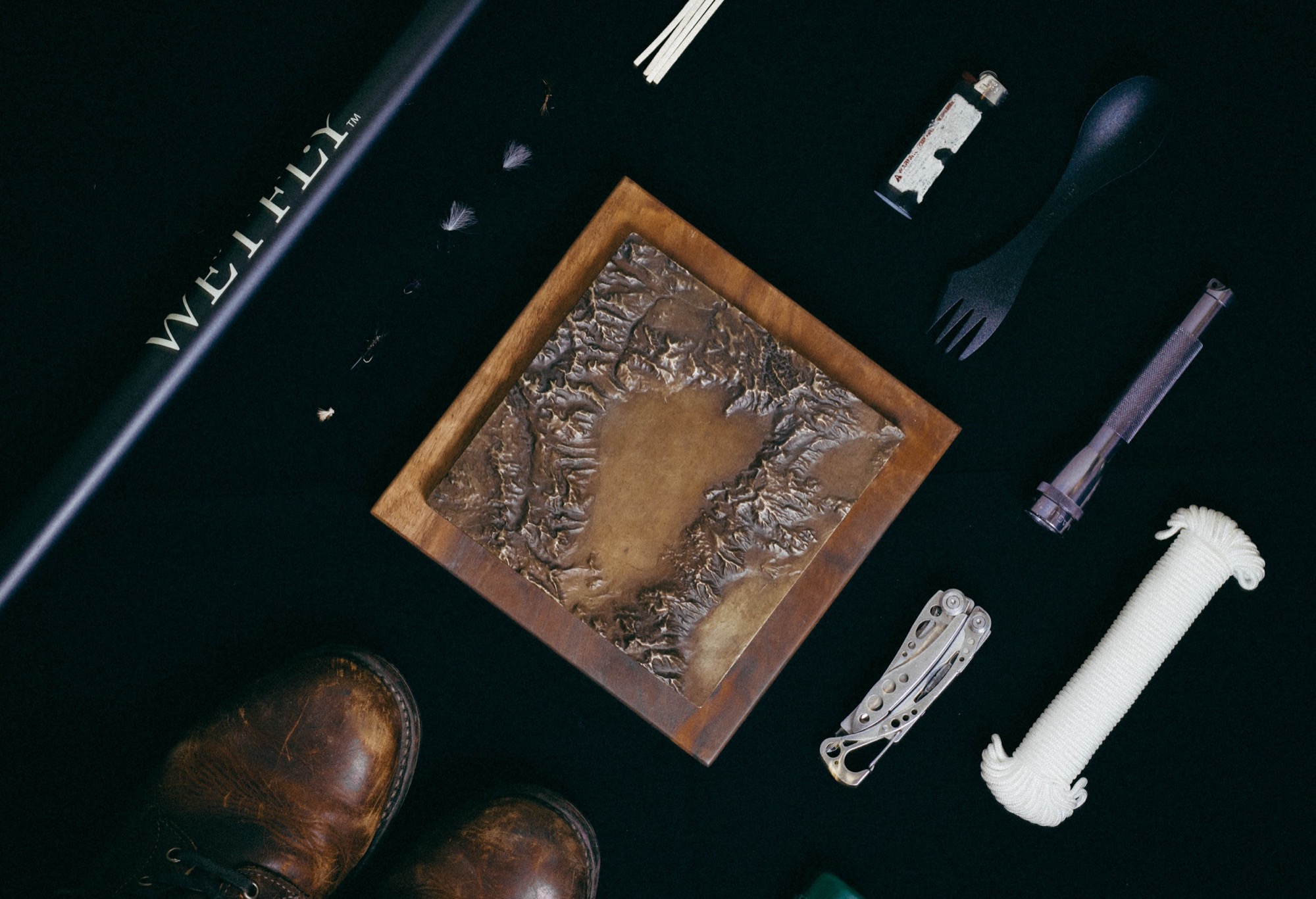
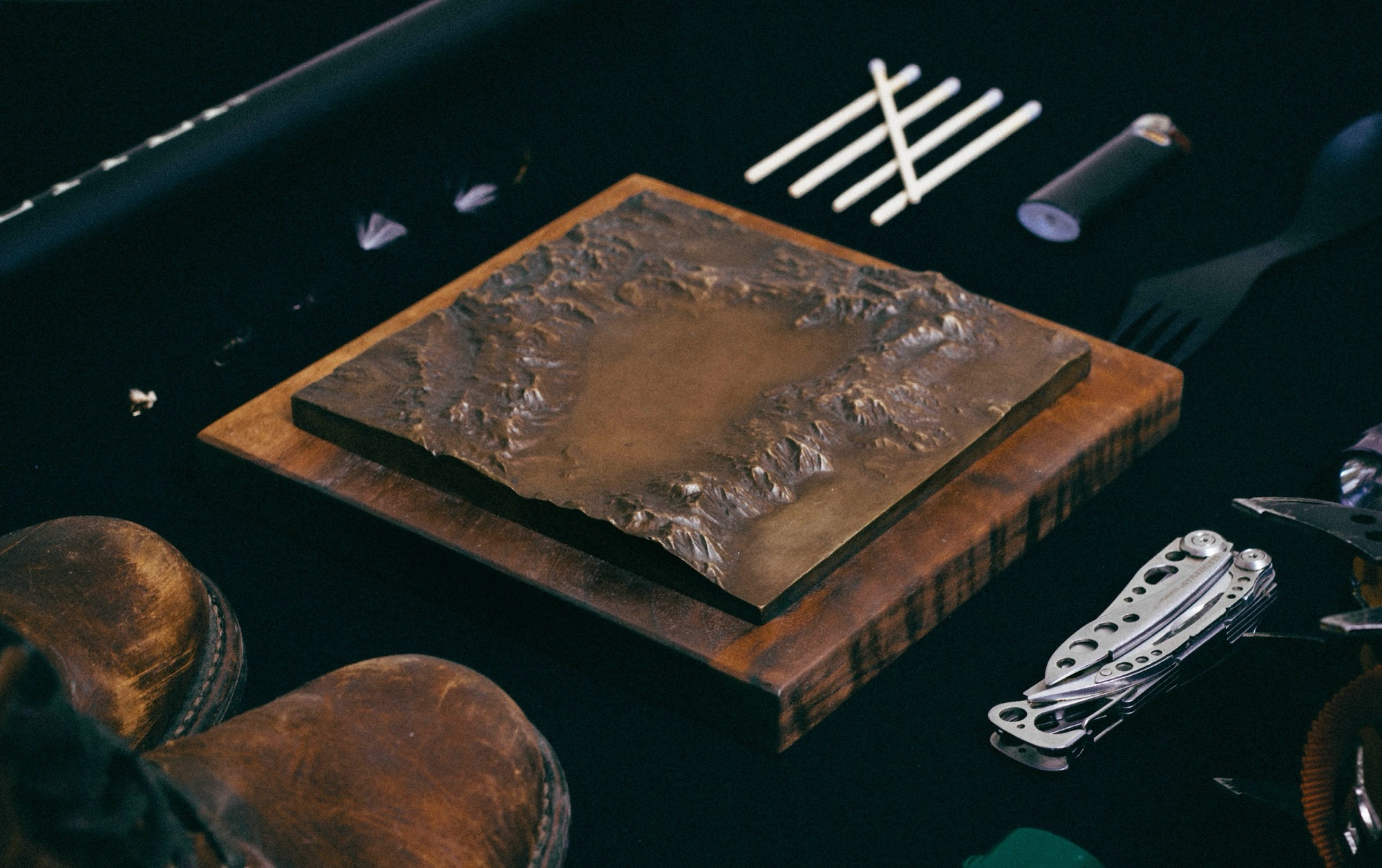
It was a mix of cigar-bar meets cabin meets tough meets rustic. Here are a few sample photos from that session

I went to the San Francisco Fabric Outlet and picked up a few different materials. It was very cheap to pick up plenty of felt, dark jean, black jean, and white fabric. This would act as the base to my photos.
I made a checklist and started knocking them out.
Flat lay photos
Lifestyle

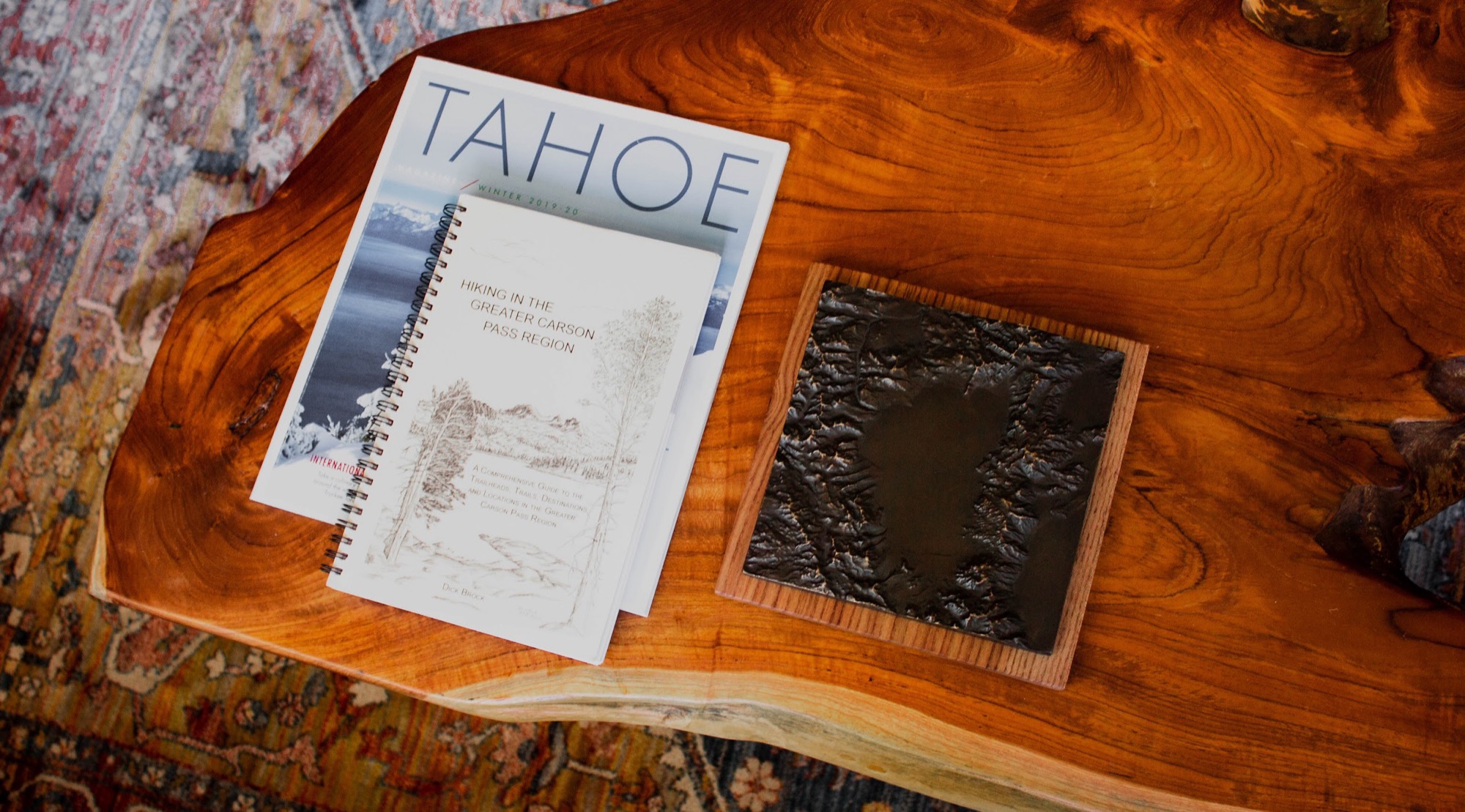
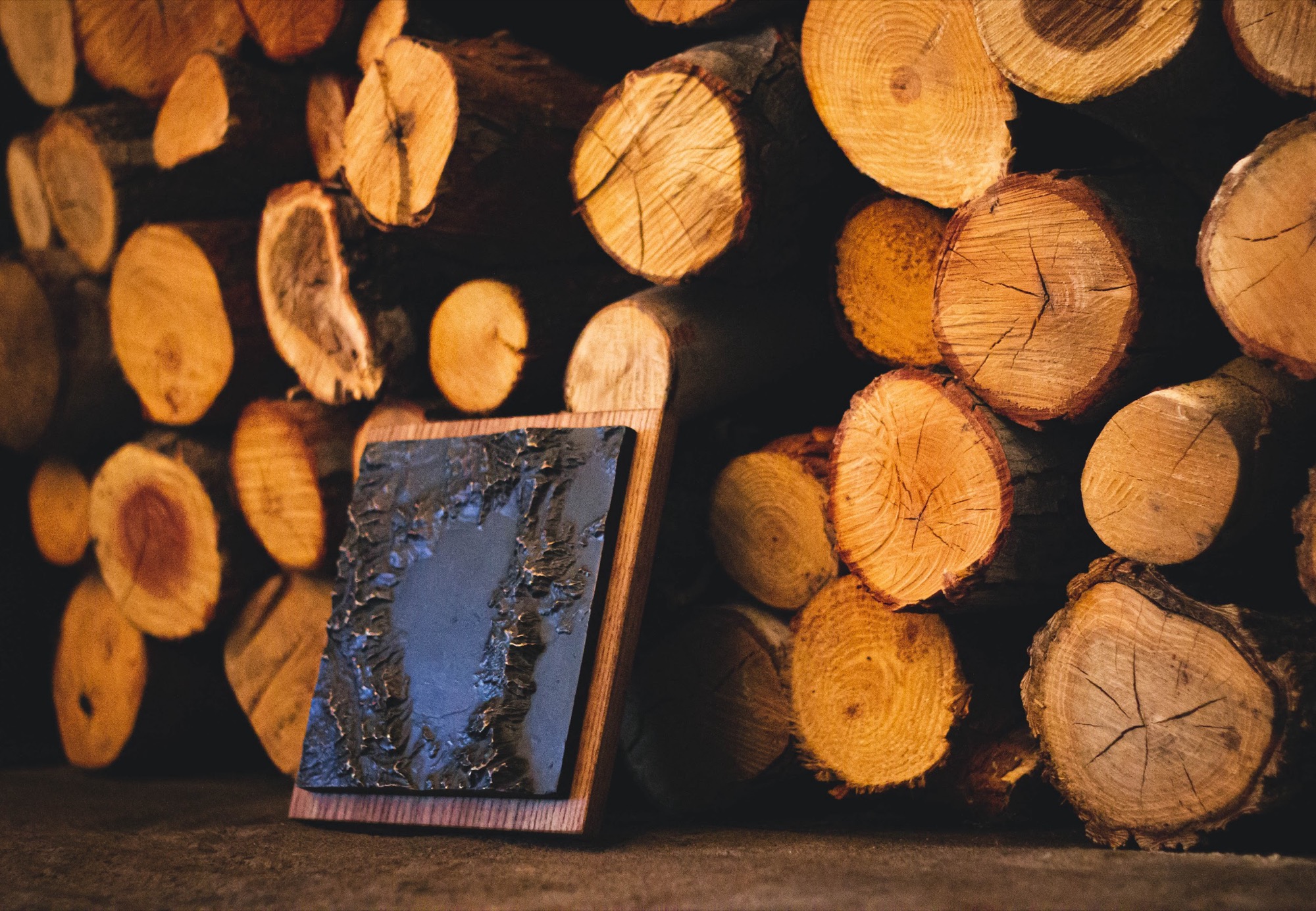
I didn’t have access to a nicely decorated cabin, so I messaged a Tahoe Cabin on Instagram and the owner was awesome. She let me come by and take as many shots as I wanted. Thanks WoodsyTahoeCabin.
Also, I didn’t have access to a lightbox to get those white background photos. Luckily the Shopify Lounge in Downtown SF has one for anyone to use. Thanks Shopify!
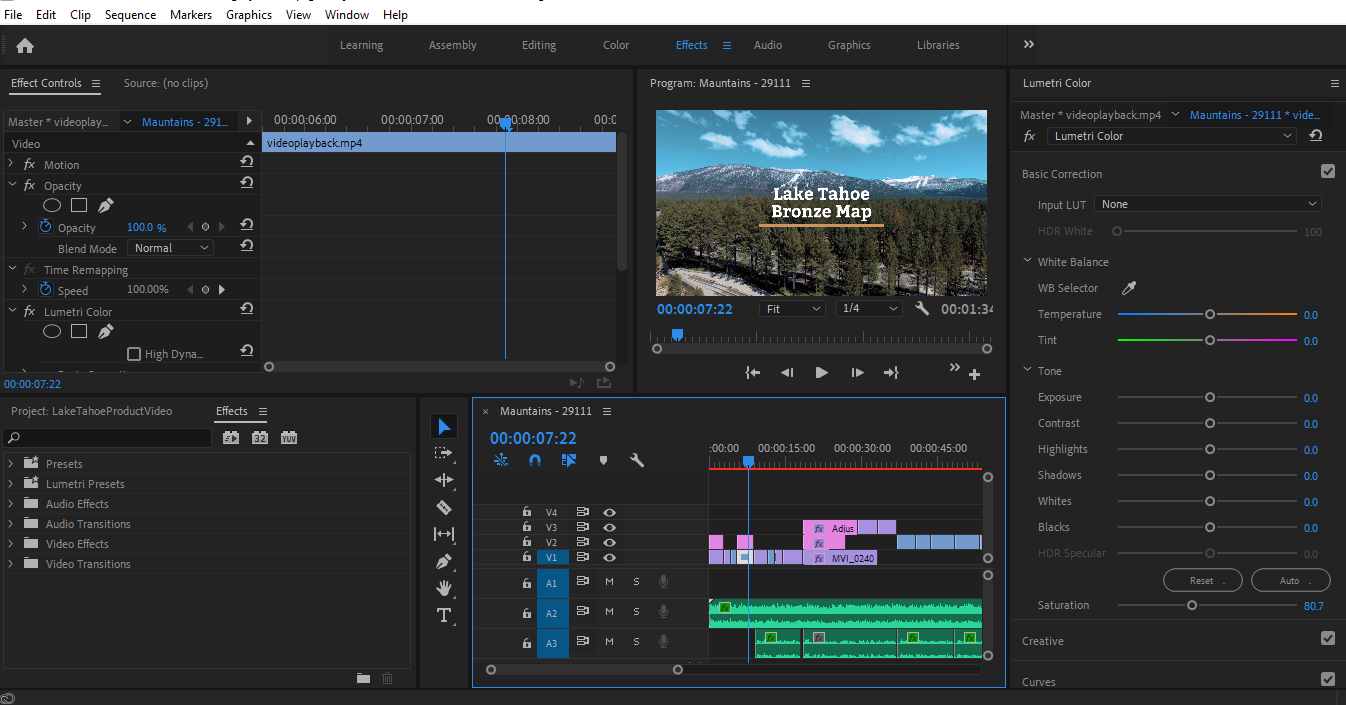
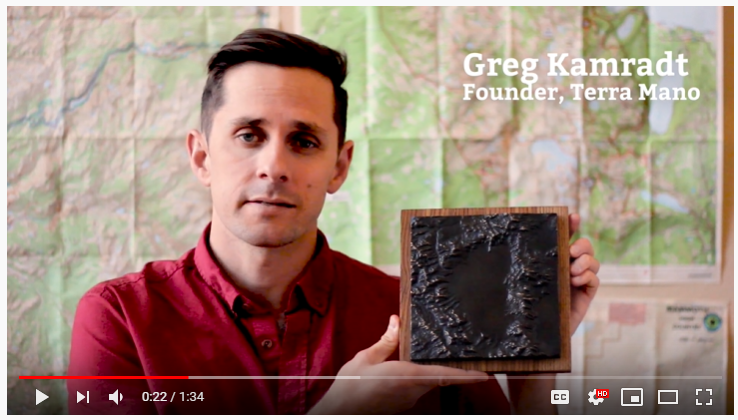
Next up was making a product video. My hypothesis is that this piece would sell because of its aesthetic. In order to get that across I made a video.
The process started the same as it always does, with a piece of inspiration. I remembered REI does awesome product videos for their best sellers. I found one of them and tried to recreate it.
Here’s a shot of working in Premier for a video
Here’s a frame of the actual product video
Content Marketing - Stories From The Mountain
In order to build a community around Terra Mano I wanted to try a content marketing strategy.
I was greatly inspired by Pat Wall’s Starter Story. He interviews entrepreneurs about their businesses and publishes them on his site. The entrepreneur promotes his or her article, and Starter Story promotes the entrepreneur on their platform. It’s a win-win.
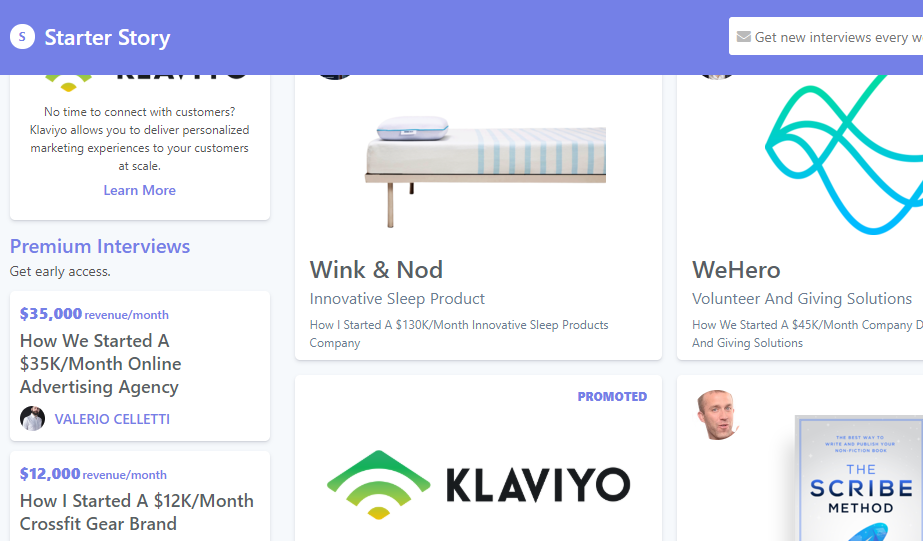
Not only that, but Pat documents his process and advocates for it to be used across different industries.
I figured I would give it a try for Terra Mano and interview one of my target markets: Climbers, hikers, mountaineers, runners, and photographers who have a connection with a specific landscape or mountain.
Enter: Stories Of The Mountain
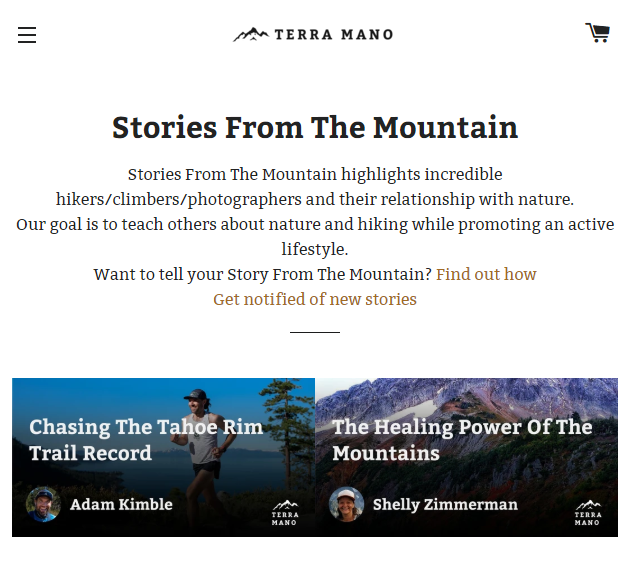
Luckily, there is a large number of outdoors-focused people on Instagram. Once you start following a couple hikers, Instagram will suggest other accounts for you to follow. This ended up being a gold mine to find eligible interviewees.
I reached out (DM’d) different hikers/climbers/runners/photographers with a large (2000+) following to see if they wanted to collaborate on an interview. If they were open for it, I took the conversation to email.
I send a list of questions to outdoors athletes who then fill out responses on their own time. Each of the amazing stories is 1K-3K words and filled with detail and hiking/climbing/running stories.
For example, Theresa Silveyra wrote about how she climbed and circumvented Mt. Hood in a single day.
This program is great for a couple reasons:
You get to build up a network of amazing athletes and creators
You build up content on your site for organic traffic
Each athlete you interview will help drive traffic
You can help promote your interviewees side projects (Julie’s World Ride)
For organizing this process go check out Pat’s documentation.
So far, Stories Of The Mountain has published 41 interviews with 5 waiting to be launched and 27 more in progress.
The interviews have driven over 25K people to the site since Jan 1 (1.5 months). However, most of the traffic that comes in only reads the stories and never makes their way to the main site or a product page. I’ll need to do a better job marketing to this group.
Pat mentions that he published 350 interviews in his first year of Starter Story, so I have a ways to go.
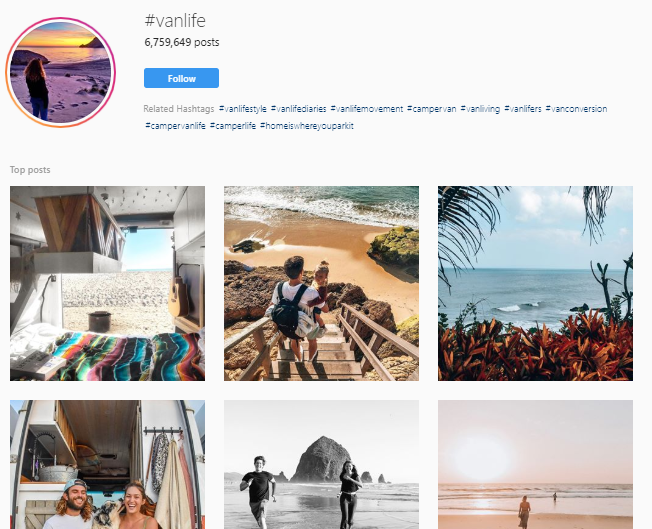
Tip: If anyone wants to try this out with another segment, the #vanlife community is ready.
Social Media Automation
Most of my posts are still manual. I’ll sign up for Buffer one day.
For Stories Of The Mountain, I’ve semi-automated some of the text captions on posts. Here is my current ipython notebook that takes an article from Shopify and generates captions from it. Example below: How I auto-generate my instagram captions
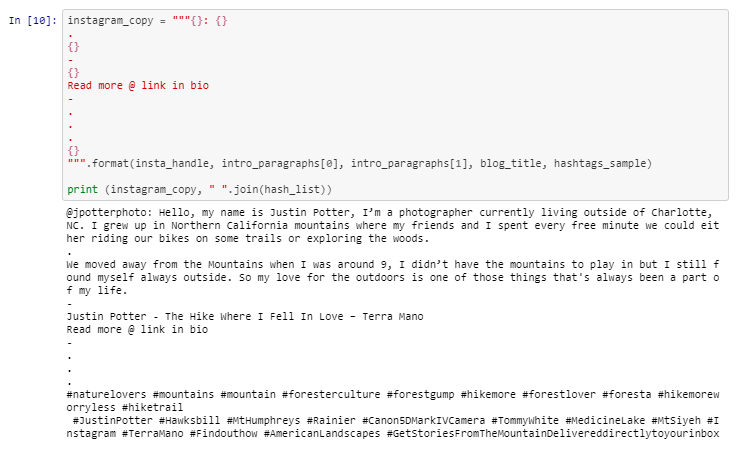
Tip: If you’re searching for things to hashtag in your published articles, I’ve found that parsing the links within the article for their text is usually a good one. Ex: If an interviewee links to Yosemite National Park in their article “#yosemitenationalpark” usually makes a good hashtag.
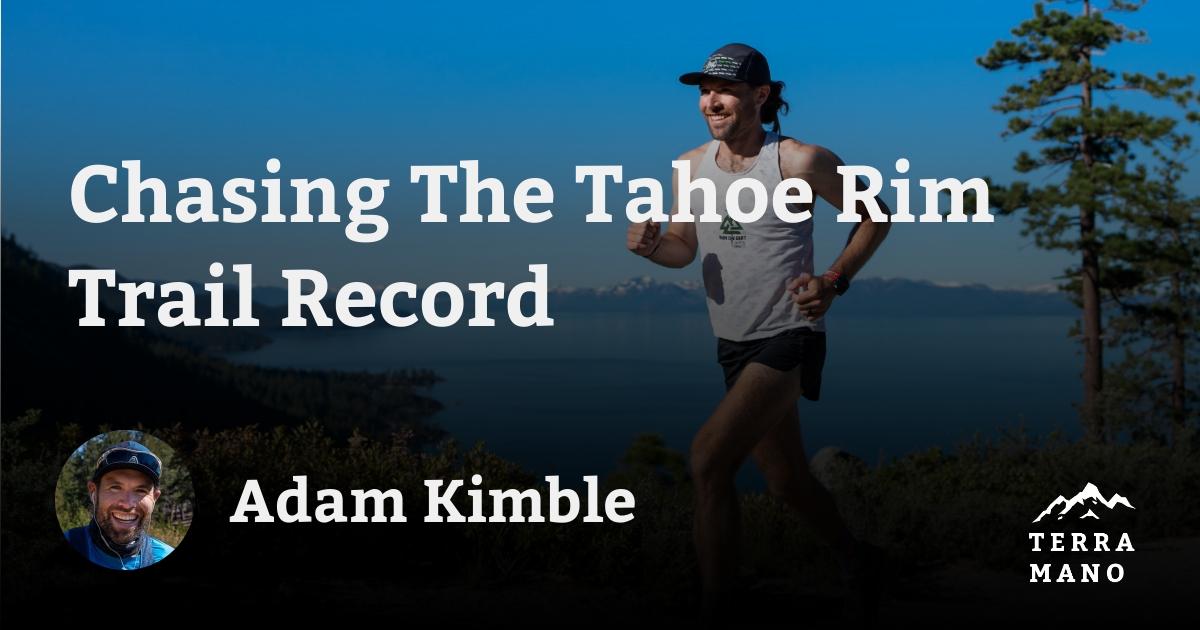
To create the pictures, I use Placid. It’s easy, and the support is personal and great. Here is a sample picture that Placid generates for an article.
Transferring the posts from google docs to shopify is still a big pain in the butt.
Finishing Up
Many of these activities are ‘nice to have’ when you are first starting off with a product. I gave most of these things low-priority while I was testing the market. Make sure you don’t spend too much time or money on activities that don’t provide value to the customer.
None of it matters unless you can execute on generating some revenue.
Stay tuned for the last article in this series where we talk about distribution and dollars: Sales: Trying To Sell A Physical Product From Scratch.
Sign up here to get this post delivered directly to your inbox.